The 7 Biggest Craps Wins of All Time: Stories of Legendary Rolls
 Jake Wilfred
Patricia Demauro walked into the Borgata Hotel Casino in Atlantic City on May 23, 2009. She was a grandmother from New Jersey on a casual gambling trip. Four hours and 18 minutes later, she’d rolled the dice 154 consecutive times without hitting a seven, setting a record that still stands and winning a sum the casino has never publicly disclosed.
The odds of what she did? Roughly 1 in 1.56 trillion.
Craps produces moments like this. Because the game is built on pure probability and short-term variance, it occasionally delivers outcomes so improbable that they become permanent entries in gambling lore. The dice combinations are fixed at 36 possibilities per roll, but stack enough rolls together and extraordinary things happen.
These are the seven biggest craps wins in recorded history. Some involve high rollers with millions to burn. Others feature ordinary people who stumbled into statistical impossibilities. All of them remind you why craps is the most dramatic game on the casino floor.
- Kerry Packer’s $30 million craps win at the MGM Grand remains the largest reported craps haul in history
- Patricia Demauro holds the official record for the longest craps roll: 154 throws over 4 hours 18 minutes
- Archie Karas turned $50 into $40 million over three years, with craps as a central game in his legendary streak
- William Lee Bergstrom won $777,000 on a single roll at Binion’s Horseshoe in one of the boldest single bets ever placed
- Stanley Fujitake earned the nickname “The Golden Arm” for rolling 118 times without a seven at the California Hotel and Casino
- These wins are statistical outliers; the house edge still favors the casino over time, and none of these players’ methods are replicable
1. Kerry Packer: The $30 Million Craps Run
Kerry Packer was an Australian media mogul with a personal fortune estimated at $6.5 billion AUD. He was also one of the most aggressive high-stakes gamblers the casino industry has ever seen.
His most famous craps session took place at the MGM Grand on the Las Vegas Strip, where he accumulated approximately $30 million in winnings over several days of play. The exact details remain somewhat guarded (casinos and ultra-high rollers don’t publicize everything), but the figure has been widely reported by gambling industry sources.
To put $30 million in craps winnings into perspective: at a standard $10 pass line table, you’d need to win 3 million bets to accumulate that amount. Packer was operating at stakes most of us can’t imagine, with single bets reportedly ranging into six figures.
If Packer was making $100,000 pass line bets backed by full odds, each winning sequence could net him $200,000-$400,000 depending on the point number. A hot streak lasting even a few hours at those stakes can snowball into millions. Variance at the extremes creates results that look impossible from the outside.
Packer wasn’t always on the winning side. He reportedly lost about $20 million in a single night at a London casino, though that was at the roulette table. Craps was where his biggest wins happened. His combination of massive bankroll, willingness to bet aggressively, and favorable short-term variance produced the largest known craps win in casino history.
High-roller craps sessions at this level involve private tables, dedicated dealer teams, and negotiated house rules (including increased odds multiples). The game Packer played was mathematically identical to what you’d find at a $10 table, but the stakes transformed the variance into enormous swings in both directions.
2. Mr. Royalty: The Mysterious Aristocrat’s $6.2 Million
The player known only as “Mr. Royalty” made two visits to The Golden Nugget Casino in Las Vegas that left the casino significantly lighter.
On his first visit, the unidentified aristocrat won approximately $4.7 million in a single night. One week later, he returned and added another $1.5 million to his total. Combined: $6.2 million from craps.
The anonymity adds to the legend. Unlike celebrity gamblers whose identities are well-known, Mr. Royalty’s real name has never been publicly confirmed. What is known is that his play was described as strategic and skilled. He reportedly managed his bets with precision, pressing on hot streaks and scaling back during cold stretches.
Whether his approach was genuinely strategic or whether he simply had an extraordinary run of favorable variance (the more likely explanation) doesn’t diminish the result. $6.2 million from two craps sessions is the stuff of gambling legend.
3. Patricia Demauro: The Longest Roll in History

Patricia Demauro’s story isn’t about the amount she won (which was never disclosed). It’s about what she did with the dice.
On May 23, 2009, at the Borgata Hotel Casino in Atlantic City, Demauro picked up the dice and didn’t put them down for four hours and 18 minutes. She rolled 154 consecutive times without hitting a seven.
To understand how absurd this is, consider the probability. A seven appears on roughly 1 in every 6 rolls, based on the 36 possible dice combinations. Rolling 154 times without one is like flipping a coin and getting heads 50+ times in a row. The calculated odds: approximately 1 in 1.56 trillion.
| Element | Traditional Craps | California Craps |
|---|---|---|
| Outcome determination | Two physical dice | Two cards from separate shufflers |
| Randomization | Physics of dice throw | Automatic card shuffling machines |
| Pass line bet | Available (1.41% house edge) | Available (1.41% house edge) |
| Free odds bet | Available (0% house edge) | Available (0% house edge) |
| Proposition bets | Available | Available |
| Shooter role | Player throws dice | Player may “throw” cards or trigger shuffler |
| Table layout | Standard craps layout | Standard craps layout |
| Proprietary side bets | Rare | Common (varies by casino) |
When a shooter gets hot, experienced players increase their action. Place bets on 6 and 8, come bets with odds, and pressing winners are all tools for capitalizing on a long roll. You can’t predict when a streak will happen, but you can position yourself to benefit from one. Our craps strategy guide covers the tactics.
4. Stanley Fujitake

Before Patricia Demauro, Stanley Fujitake held the record for the longest craps roll. On May 28, 1989, at the California Hotel and Casino in Las Vegas, Fujitake rolled 118 consecutive times over three hours and six minutes without sevening out.
His session produced over $1 million in winnings, and the performance earned him the permanent nickname “The Golden Arm.” The California Hotel still recognizes his achievement, and the term “Golden Arm” has entered craps terminology as a tribute to any shooter with an exceptionally long roll.
Fujitake’s record stood for 20 years before Demauro broke it. During that two-decade span, millions of craps rolls occurred worldwide. None of them produced a streak that matched his. That’s how rare a three-hour roll really is.
Some craps casinos maintain their own “Golden Arm” clubs, honoring shooters who roll for more than one hour without sevening out. At a typical craps table averaging 100-120 rolls per hour, a one-hour roll means roughly 100+ consecutive throws. It’s rare enough that casinos track it as a notable achievement.
5. Archie Karas

Archie Karas’s story, known as “The Run,” is one of the most legendary gambling narratives in history. It didn’t happen in a single session or at a single game. It happened over three years, from 1992 to 1995, and craps played a central role.
Karas arrived in Las Vegas with $50. He started by borrowing money and playing high-stakes poker. As his bankroll grew, he shifted significant action to the craps tables. Over the course of The Run, he turned that initial $50 into approximately $40 million.
The craps portion of his streak involved massive bets on the pass line with full odds at the highest limits casinos would accept. Karas was known for pressing bets aggressively during hot rolls and cutting his losses quickly during cold ones.
The ending is less glorious. Karas eventually lost nearly all of his $40 million, returning to a bankroll measured in thousands rather than millions. His story is equal parts inspiration and cautionary tale: proof that variance can create millionaires, and that the house edge eventually corrects extraordinary runs.
Archie Karas’s story is frequently cited by gambling enthusiasts as proof that craps can be beaten. It isn’t. Karas experienced an extreme statistical outlier driven by enormous variance at maximum stakes. Over enough time, his results reverted. The house edge is real, and no strategy or streak eliminates it. Good bankroll management means knowing when to walk away, something Karas ultimately didn’t do.
6. William Lee Bergstrom
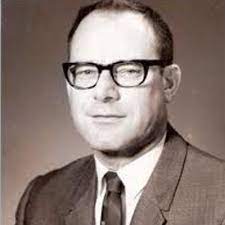
In 1980, William Lee Bergstrom walked into Binion’s Horseshoe Casino in downtown Las Vegas carrying a suitcase. Inside: $777,000 in cash.
He placed the entire amount on the don’t pass line. One roll. All or nothing.
The shooter rolled. Bergstrom won. He doubled his money to $1,554,000, picked up his chips, cashed out, and left.
The audacity of the bet is what makes it legendary. $777,000 on a single don’t pass bet in 1980 is the equivalent of well over $2 million in 2026 dollars. One roll of the dice separated Bergstrom from doubling his fortune or losing everything.
He returned to Binion’s several more times over the following years, placing large single bets with varying results. His willingness to risk life-changing money on a single dice roll earned him the nickname “The Phantom Gambler.”
The don’t pass bet has a house edge of 1.36%. On a $777,000 wager, the casino’s statistical advantage was about $10,567. But that’s the long-term average over thousands of identical bets. On a single bet, the outcome is binary: win or lose. Bergstrom had roughly a 47.93% chance of winning (excluding the 2.78% push on a 12). He cleared that hurdle and walked away with over $1.5 million.
7. Don Johnson

Don Johnson (the gambler, not the actor) is better known for his legendary blackjack wins, but craps contributed to his remarkable $15 million haul from three Atlantic City casinos within six months during 2011.
Johnson’s approach wasn’t about luck. He negotiated favorable house rules and rebate deals with casinos hungry for high-roller action. While the specifics of his craps play are less documented than his blackjack strategy, his overall approach, combining negotiated advantages with aggressive betting during favorable conditions, applies across games.
His story highlights something important about high-stakes gambling: at the top end, the terms of play are negotiable. High rollers can secure better odds multiples, loss rebates, and other concessions that effectively reduce the house edge below standard levels. For the rest of us, the best craps bets are our negotiation tool.
What These Wins Tell Us About Craps
Seven stories. Millions of dollars. And every single one of them was a statistical outlier.
That’s the honest takeaway. These wins happened because short-term variance in craps can produce extreme results, both positive and negative. The same mathematical properties that allowed Patricia Demauro to roll 154 times without a seven are the same properties that cause most shooters to seven out within 8-10 rolls.
None of these winners had a secret system. None of them overcame the house edge through strategy. They experienced favorable variance at the right stakes during the right window of time. Some, like Karas, eventually gave it all back. Others, like Bergstrom and Demauro, had the sense (or the circumstance) to walk away.
The lesson isn’t “you can win $30 million at craps.” The lesson is that craps offers the potential for extraordinary moments. The combination of low house edge bets, the social electricity of the table, and the raw unpredictability of dice creates an environment where anything can happen in the short term.
For the strategy and bet selection that gives you the best mathematical chance of having your own memorable session, our how to win at craps guide covers the practical side.
| Winner | Amount Won | Casino | Year | What Made It Special |
|---|---|---|---|---|
| Kerry Packer | ~$30 million | MGM Grand, Las Vegas | Various | Largest total craps win ever reported |
| Mr. Royalty | ~$6.2 million | Golden Nugget, Las Vegas | Unknown | Two massive wins within one week |
| Patricia Demauro | Undisclosed | Borgata, Atlantic City | 2009 | 154 rolls, longest craps roll in history |
| Stanley Fujitake | $1+ million | California Hotel, Las Vegas | 1989 | 118 rolls, “The Golden Arm” |
| Archie Karas | ~$40 million (total) | Various, Las Vegas | 1992-1995 | $50 to $40M over 3 years |
| William Lee Bergstrom | $777,000 | Binion’s Horseshoe, Las Vegas | 1980 | All-in on one don’t pass roll |
| Don Johnson | $15 million (total) | Three AC casinos | 2011 | Negotiated terms + craps and blackjack |
The Next Roll Could Be Yours
Every player who sets foot at a craps table is one statistical outlier away from a story worth telling for the rest of their life. That’s the magic of the game. Not that you’ll win $30 million. But that the dice don’t know your name, your bankroll, or your experience level. They just land.
The players on this list didn’t have secret knowledge. They had favorable timing, appropriate stakes, and in most cases, the good sense to make the best available bets. Some walked away at the right moment. Others didn’t.
Play craps because it’s the most exciting game on the casino floor. Play it with smart bets, disciplined money management, and the understanding that the house has an edge. And if the dice decide to cooperate for an hour, two hours, or four hours and eighteen minutes? Enjoy every second of it.
Best Online Craps Casinos (Last Updated September 2026)







Biggest Craps Wins FAQs
Kerry Packer’s approximately $30 million win at the MGM Grand in Las Vegas is the largest reported craps win in history. Packer was an Australian media billionaire known for ultra-high-stakes gambling across multiple casino games.
Patricia Demauro holds the record with 154 consecutive rolls over 4 hours and 18 minutes at the Borgata Hotel Casino in Atlantic City on May 23, 2009. The odds of this happening are approximately 1 in 1.56 trillion.
These wins were products of extreme short-term variance, not replicable strategies. The house edge on craps bets remains constant regardless of who’s playing. What you can replicate: choosing low-edge bets, managing your bankroll, and being positioned to benefit from favorable variance when it occurs.
The Borgata never disclosed the exact amount. Given that she rolled for over four hours with a full craps table of bettors, the total amount won by all players at the table was likely in the millions. Demauro’s personal winnings would depend on her bet sizes and selections during the roll.
No. Karas eventually lost nearly all of his $40 million, returning to a fraction of his peak bankroll. His story is a cautionary tale about the difference between short-term variance and long-term expectation. The house edge eventually corrects even the most extraordinary winning streaks.
Bergstrom placed his $777,000 on the don’t pass line at Binion’s Horseshoe Casino in Las Vegas in 1980. He won on a single roll, doubling his money to $1,554,000. It remains one of the largest single craps bets in documented casino history.
